GMRS Radios for Ozarks Camping and Road Trips: A Beginner’s Guide
The Ozarks are made for winding back roads, wooded campgrounds and weekend adventures. But between mountain ridges and remote valleys, cellphone coverage can be inconsistent. For families and groups traveling together, GMRS two-way radios offer another way to communicate at short range—provided everyone understands their limits.
What is GMRS, and why bring it camping?
The General Mobile Radio Service (GMRS) is a U.S. radio service used for local voice communication. Handheld and vehicle-mounted radios can help coordinate a caravan, check in between nearby campsites, or keep members of a group in touch during an outing. Unlike a phone, a radio can communicate directly with another compatible radio without a cellular network.
Range is never guaranteed. Hills, trees, buildings, antennas, power and location all affect whether two radios can hear one another. A radio should be part of a communications plan—not a substitute for a phone, satellite emergency device or 911.
Simplex versus repeaters in the Ozarks
Simplex means one radio talks directly to another on the same channel. This is useful when people are relatively close together, such as at a campsite or along a short convoy. Repeaters receive and retransmit radio signals from a higher site and may help operators communicate across a wider area, depending on terrain and the repeater’s access requirements.
For example, Ozark GMRS maintains an Arkansas GMRS repeater directory with local listings including Fayetteville, Bentonville, Lincoln, Tontitown and West Fork. Those listings are planning resources, not promises of live coverage or availability. Confirm each system’s current settings and owner rules before transmitting.
Do you need a GMRS license?
In the United States, most GMRS transmitting requires an FCC-issued license. The current standard license application fee is listed as $35, the license term is ten years, and no examination is required. A single license generally covers eligible immediate family members under FCC rules. Check the FCC’s official information before applying, because requirements and fees can change.
For a practical walkthrough, see the Ozark GMRS Getting Started guide. It explains the licensing process, radio basics, channels, tones and how to make a first contact.
Five radio habits that make a camping trip easier
- Agree on a channel before leaving. Test both radios at home, then check them again when you arrive.
- Carry spare power. Charge batteries and consider a suitable backup charging option.
- Listen before transmitting. Avoid interrupting an ongoing conversation and follow channel rules.
- Use your FCC callsign as required. Identify properly when operating under a GMRS license.
- Plan for no signal. Establish meeting points and check-in times rather than assuming a repeater will always be reachable.
Where to learn more about Northwest Arkansas GMRS
For local operators, Fayetteville 700 is one example of a community repeater with published programming details and regular net information. A weekly net is a scheduled on-air gathering that gives licensed operators a chance to practice and meet others. Always verify the latest schedule on the repeater page.
Whether you’re camping near the Boston Mountains or heading through Northwest Arkansas on a road trip, the best radio is one you already know how to use. Spend time practicing before the trip, and pair your radio plan with maps, weather awareness and appropriate emergency equipment.
More from Rockin’ Hog Media: Explore our Rocklahoma festival coverage for regional outdoor-event stories.
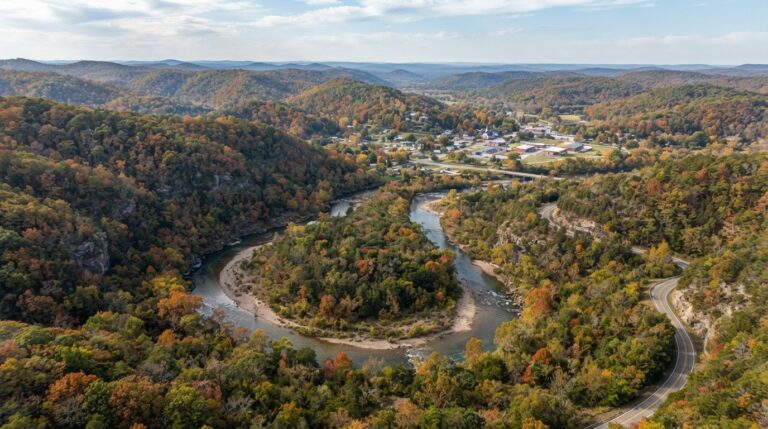
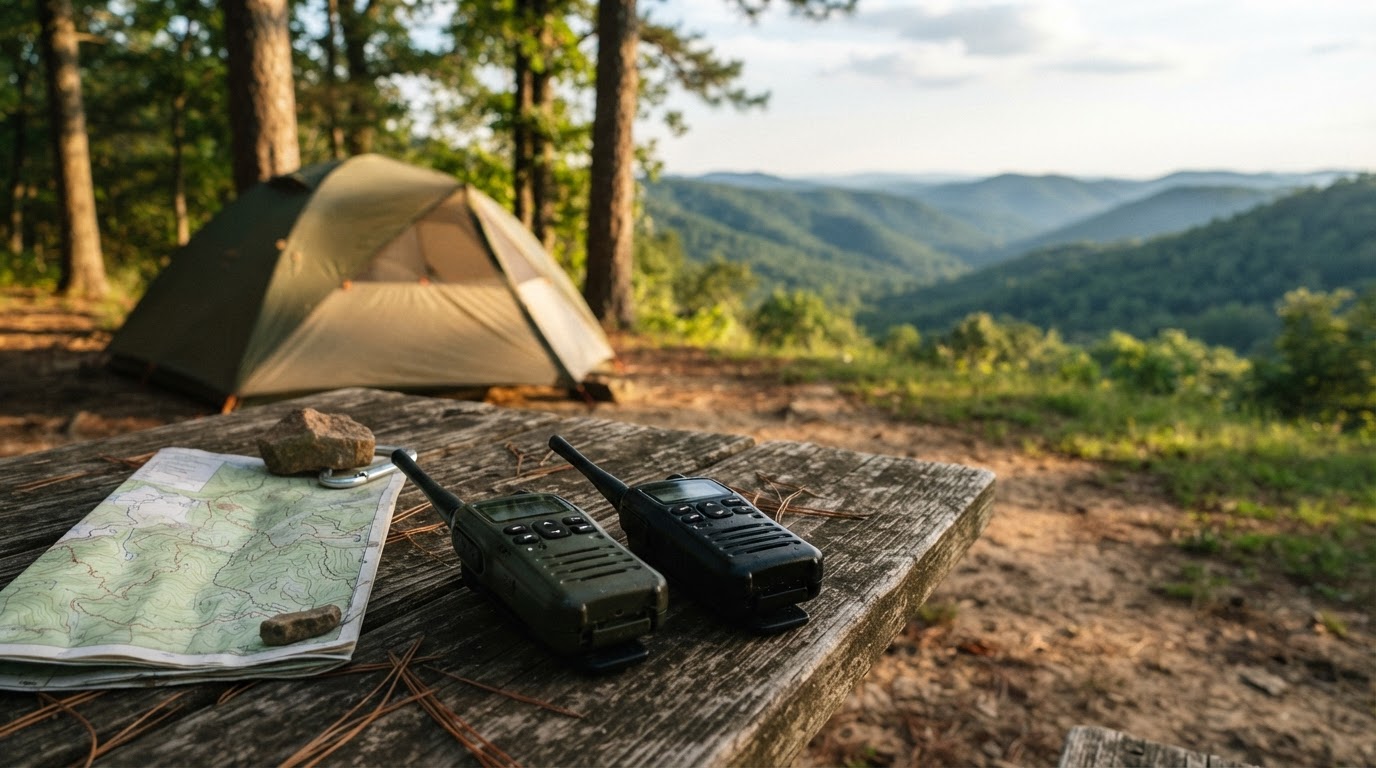
Featured image is an illustrative editorial image, not a photograph of a specific campsite.
More Ozarks trip ideas
Pair your radio planning with these nearby travel and food stories.