
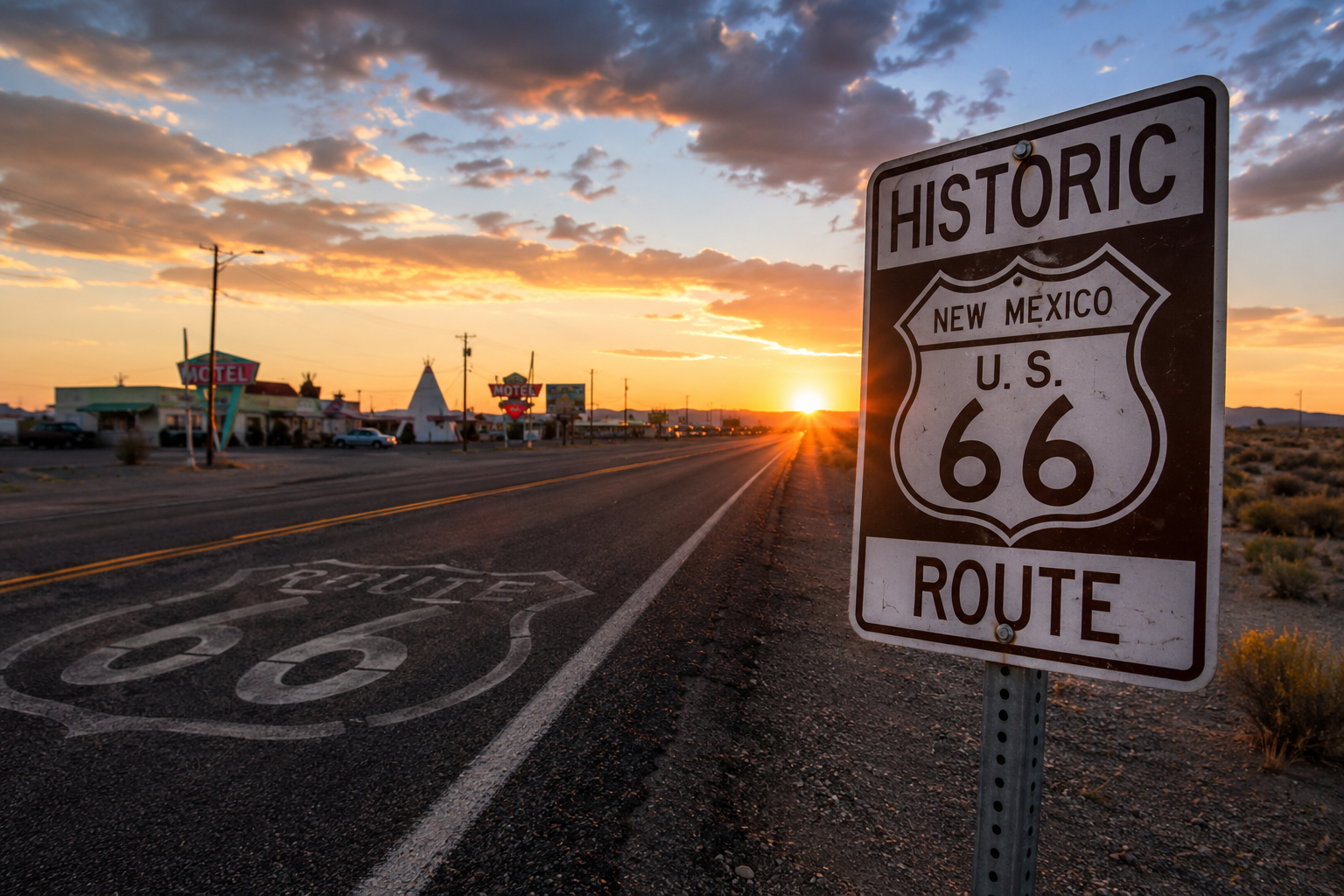
The Ultimate Guide to Route 66 Attractions in New Mexico
Few highways capture the spirit of the American road trip like Historic Route 66. Across New Mexico, the Mother Road rolls through neon-lit motel signs, vintage diners, desert landscapes, Pueblo history, ghost towns, museums, and some of the most memorable roadside stops in the Southwest.
New Mexico is one of the most rewarding Route 66 states because it still feels authentic. You can cruise old alignments, photograph classic signs, explore historic downtowns, and find places where the road-trip culture never really disappeared.
The National Park Service notes that New Mexico has been a major preservation area for Route 66, including neon restoration projects and landmarks like the Blue Swallow Motel in Tucumcari and El Rancho Hotel in Gallup. (National Park Service)
Tucumcari: Neon, Murals, and Classic Route 66 Energy
Tucumcari is one of the best-known Route 66 towns in New Mexico. It is famous for vintage motel signs, murals, roadside shops, and classic Mother Road photo stops.
Don’t miss:
- Blue Swallow Motel — one of the most iconic neon motel stops on Route 66. (National Park Service)
- Tee Pee Curios — a classic roadside souvenir stop known for its tepee-shaped entrance.
- New Mexico Route 66 Museum — a good place to dig into the state’s Route 66 story.
- Tucumcari murals — great for photos and social media posts.
- Route 66 Monument — a quick landmark stop for road-trip photos.
Tucumcari is the kind of town where you slow down, grab pictures, and let the old highway atmosphere sink in.

Santa Rosa: Blue Hole and Classic Roadside Stops
Santa Rosa is another must-stop town along New Mexico’s Route 66 stretch. Its biggest attraction is the Blue Hole, a deep, clear natural swimming and diving spot that has become one of the most famous roadside stops in the state.
Also worth visiting:
- Blue Hole
- Route 66 Auto Museum
- Historic downtown Santa Rosa
- Classic diners and motels
Santa Rosa works well as an overnight or half-day stop between Tucumcari and Albuquerque.
Albuquerque: Central Avenue and the Urban Heart of Route 66
Albuquerque has one of the strongest Route 66 identities in the country. Historic Route 66 runs through the city along Central Avenue, connecting neighborhoods, neon signs, restaurants, theaters, and roadside landmarks.
Visit Albuquerque describes Route 66 as a major part of the city’s culture and highlights the city’s neon, classic cars, and Route 66 centennial energy. (Visit Albuquerque)
Top Albuquerque Route 66 stops:
- Central Avenue / Historic Route 66
- Nob Hill Route 66 arches
- KiMo Theatre — a 1927 Pueblo Deco landmark highlighted in Route 66 travel guides. (Visit The USA)
- 66 Diner — located at 1405 Central Ave NE and known for its retro diner atmosphere, burgers, shakes, and classic Route 66 feel. (66 Diner)
- Route 66 Visitor Center — Albuquerque’s Route 66 Visitor Center has been positioned as a hub for Route 66 centennial activity. (City of Albuquerque)
- Nob Hill
- Old Town Albuquerque
- Indian Pueblo Cultural Center — just off the Route 66 path and worth the stop.
Albuquerque is the best New Mexico stop if you want a mix of food, neon, history, photos, and city energy.
Laguna Pueblo and Mesita: Scenic Route 66 History
West of Albuquerque, Route 66 enters one of the most culturally rich and scenic parts of New Mexico. The Laguna Pueblo and Mesita area gives travelers a different kind of Route 66 experience: quieter roads, Pueblo history, desert views, and older alignments.
Stops and nearby highlights:
- Laguna Pueblo area
- Mesita
- Historic trading post sites
- Scenic old Route 66 alignments
- Desert and mesa views
This is a section where the drive itself is part of the attraction.
Grants: Murals, Mining History, and El Malpais
Grants is a strong western New Mexico Route 66 stop with murals, mining history, and easy access to dramatic volcanic landscapes.
Things to see:
- Route 66 murals
- New Mexico Mining Museum
- Historic downtown Grants
- El Malpais National Monument — a rugged volcanic landscape near Grants with lava flows, sandstone cliffs, caves, and hiking opportunities. (Western National Parks)
- El Malpais National Conservation Area — BLM notes that exits from I-40 near Grants provide access to Highway 117, recreation areas, wilderness, and ranger facilities. (Bureau of Land Management)
Grants is a great stop if you want Route 66 history plus outdoor adventure.
Gallup: El Rancho Hotel, Native Art, and Railroad History
Gallup is one of New Mexico’s strongest Route 66 towns. Visit Gallup notes that Route 66 crossed New Mexico from Tucumcari to Gallup and helped shape the state’s travel history. (Visit Gallup)
Top Gallup stops:
- El Rancho Hotel — a historic Route 66 landmark restored with preservation support. (National Park Service)
- Downtown Gallup neon
- Native American art shops
- Historic railroad district
- Route 66 photo stops
- Gallup cultural events
Gallup is a perfect final New Mexico stop before continuing west into Arizona.

Hidden Gems Along Route 66 in New Mexico
For travelers who like the weird, forgotten, and photogenic side of the Mother Road, New Mexico has plenty of hidden gems.
Add these to your list:
- Glenrio Ghost Town
- Cuervo
- Budville Trading Post
- Continental Divide Route 66 marker
- Old gas stations and vintage signs
- Abandoned alignments and roadside ruins
Always respect private property and posted signs. Some old Route 66 locations are historic but not open for public access.
Best Historic Motels on Route 66 in New Mexico
New Mexico is one of the best states for classic Route 66 motel culture.
Notable stays and photo stops:
- Blue Swallow Motel — Tucumcari
- Motel Safari — Tucumcari
- Monterey Motel — Albuquerque
- El Vado Motel — Albuquerque
- El Rancho Hotel — Gallup
Even if you do not stay overnight, many of these places are worth seeing for the architecture, neon, and history.
Best Classic Food Stops
Route 66 and road food go together.
Consider stops like:
- 66 Diner — Albuquerque (66 Diner)
- Del’s Restaurant — Tucumcari
- Kix on 66 — Tucumcari
- Classic diners and local cafes in Santa Rosa, Grants, and Gallup
For a true Route 66 trip, skip the chains when you can and eat somewhere with history.
Suggested 3-Day Route 66 New Mexico Itinerary
Day 1: Texas Border to Santa Rosa
Start near Glenrio, explore Tucumcari, photograph neon and murals, then continue to Santa Rosa for Blue Hole and the auto museum.
Day 2: Santa Rosa to Albuquerque
Drive west toward Albuquerque. Spend time on Central Avenue, Nob Hill, 66 Diner, KiMo Theatre, and the Route 66 Visitor Center.
Day 3: Albuquerque to Gallup
Head west through Laguna Pueblo, Grants, and El Malpais, then finish in Gallup with El Rancho Hotel, downtown neon, and Native art shops.
Frequently Asked Questions
Is Route 66 still drivable in New Mexico?
Yes, many sections are still drivable, though travelers often move between old alignments, frontage roads, city streets, and I-40.
What is the best Route 66 town in New Mexico?
Tucumcari is probably the most classic neon-and-motel Route 66 town, while Albuquerque offers the strongest urban Route 66 experience.
How long does it take to drive Route 66 across New Mexico?
You can cross the state in a day, but two to three days is much better if you want to actually enjoy the stops.
What is the best time of year to drive Route 66 in New Mexico?
Spring and fall are usually the most comfortable. Summer can be hot, and winter can bring cold weather or snow in some higher-elevation areas.
Final Thoughts
Route 66 through New Mexico is more than a highway. It is neon, desert, diners, murals, Pueblo history, ghost towns, old motels, and open-road nostalgia all in one trip.
For travelers who want the real Mother Road experience, New Mexico delivers one of the most authentic stretches anywhere in America.
Rockin’ Hog Tip: Take your time. The best Route 66 memories usually happen when you pull off the interstate, slow down, and follow the old road.